Grease trap cleaning and pump-outs, drain pit clean-outs and industrial wet vacuum extraction for commercial kitchens across Melbourne and Victoria — fast, safe and fully compliant with Victorian waste disposal regulations.
Every commercial kitchen with a grease trap needs it pumped out regularly. Fats, oils and food solids build up until the trap can't do its job, and that's when drains block, odours start and wastewater backs up into the kitchen.
Our grease trap service uses a muck sucker to extract the full contents of the trap — grease, sludge and wastewater — which is then transported and disposed of at licensed facilities. You receive waste disposal documentation after every job for your trade waste and environmental records.
We provide grease trap cleaning across Melbourne and regional Victoria, including Geelong, Ballarat and Bendigo. Not sure what your water corporation requires? See our guide to grease trap rules in Victoria.
A "muck sucker" is an industrial wet/dry vacuum extraction unit capable of removing large volumes of liquid grease, slurry, wastewater and solid debris from confined or hard-to-access areas of your commercial kitchen and drainage systems.
Unlike standard cleaning, muck sucker services are designed for the heavy-duty jobs — grease trap pumpouts, drain pit cleanouts, subfloor grease extraction, and the removal of accumulated waste from areas that conventional cleaning simply cannot reach.
All extracted waste is transported by our licensed operators and disposed of in accordance with the Environment Protection Act 2017 (Victoria) and EPA Victoria regulations.
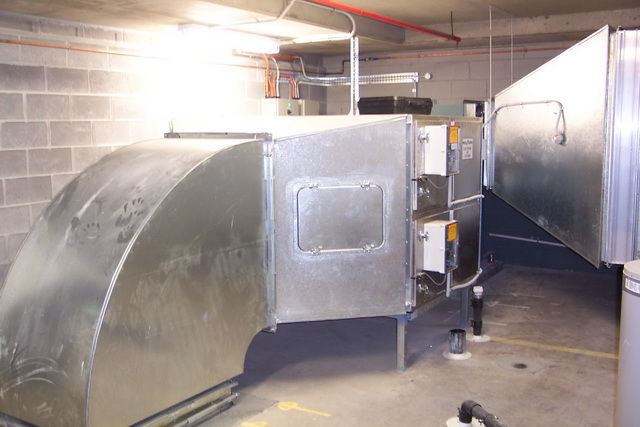
Complete extraction of accumulated grease, fats, oils and wastewater from underground and above-ground grease traps.
Removal of grease sludge, debris and wastewater from kitchen drain pits and sumps that can block drainage systems.
Wet vacuum extraction of grease that has accumulated beneath kitchen flooring, under equipment and in hard-to-reach voids.
Removal of liquid grease pooled in exhaust duct sumps and low points — a critical fire prevention measure.
All extracted waste is transported and disposed of at licensed facilities in full compliance with EPA Victoria requirements.
Waste disposal documentation provided after every job — essential for your environmental compliance records.
Improper disposal of grease trap waste is an offence under Victoria's environment protection laws and can attract significant penalties.
The Environment Protection Act 2017 (Vic) replaced the old EPA Act and introduced a general environmental duty — meaning businesses must take all reasonably practicable steps to prevent pollution. Key obligations for commercial kitchens include:
Commercial kitchen operators in Melbourne must hold a Trade Waste Agreement with their local water corporation — in Melbourne that's Greater Western Water, South East Water or Yarra Valley Water, depending on your suburb. This agreement specifies grease trap maintenance requirements, including:
Depending on your location in Melbourne, your trade waste obligations fall under Greater Western Water, South East Water or Yarra Valley Water. Each authority has specific grease trap pumpout frequency requirements and effluent standards. Blue Sky Filtration is familiar with all Melbourne water authority requirements and can ensure your service schedule meets your specific trade waste agreement conditions.
Blocked drainage caused by grease accumulation is a food safety hazard under the Victorian Food Act. An overflowing drain pit or backed-up grease trap can trigger an immediate closure order from your local council Environmental Health Officer.
High-volume fryers, fish & chip shops, burger restaurants, 24/7 venues
Standard restaurants, cafés, pub kitchens, school canteens
Low-volume operations, small cafes, function centres
Emergency blockage response, post-flood, post-equipment failure
Your water corporation's trade waste agreement will specify minimum pumpout frequencies. Blue Sky Filtration can review your agreement and set up a compliant service schedule.
In Victoria, grease trap waste dumped illegally — even accidentally via unlicensed contractors — can result in EPA enforcement notices, fines and remediation costs. Always use a licensed waste transporter and demand a waste certificate.
A blocked kitchen drain pit doesn't just smell — it can force an immediate trading shutdown if an EHO deems the drainage system unsafe. Emergency call-outs for grease blockages are disruptive and expensive. Regular pump-outs help stop blockages before they happen.
Grease that liquefies during cooking rises through the exhaust system and can pool in low points of ductwork and duct sumps. This pooled liquid grease is highly flammable and is often overlooked during routine canopy cleans. Muck sucker extraction of duct sumps is a critical fire prevention measure for high-volume kitchens.
An industrial wet/dry vacuum extraction unit that removes large volumes of liquid grease, slurry, wastewater and solid debris from grease traps, drain pits, duct sumps and other hard-to-reach areas of a commercial kitchen.
Your trade waste agreement sets the minimum frequency, typically every 1–3 months depending on trap size and usage. As a guide: monthly for high-volume fryers and 24/7 venues, every 3 months for standard restaurants and cafes, and every 6 months for low-volume operations.
Common signs are slow or blocked drains, standing water or sludge, grease odours around the drains and an overflowing drain pit. Don't wait for them, though — your trade waste agreement sets a minimum pump-out frequency you need to meet regardless.
Your water corporation, through your trade waste agreement. In Melbourne that's Greater Western Water, South East Water or Yarra Valley Water, depending on your suburb. Regional Victoria is covered by regional water corporations — see our service areas page for which one covers you.
It's transported and disposed of at licensed facilities, and you receive waste disposal documentation after every job for your environmental compliance records.
Yes. As well as grease trap pump-outs, we clean out kitchen drain pits and sumps, extract grease from subfloor voids, and remove liquid grease pooled in exhaust duct sumps.